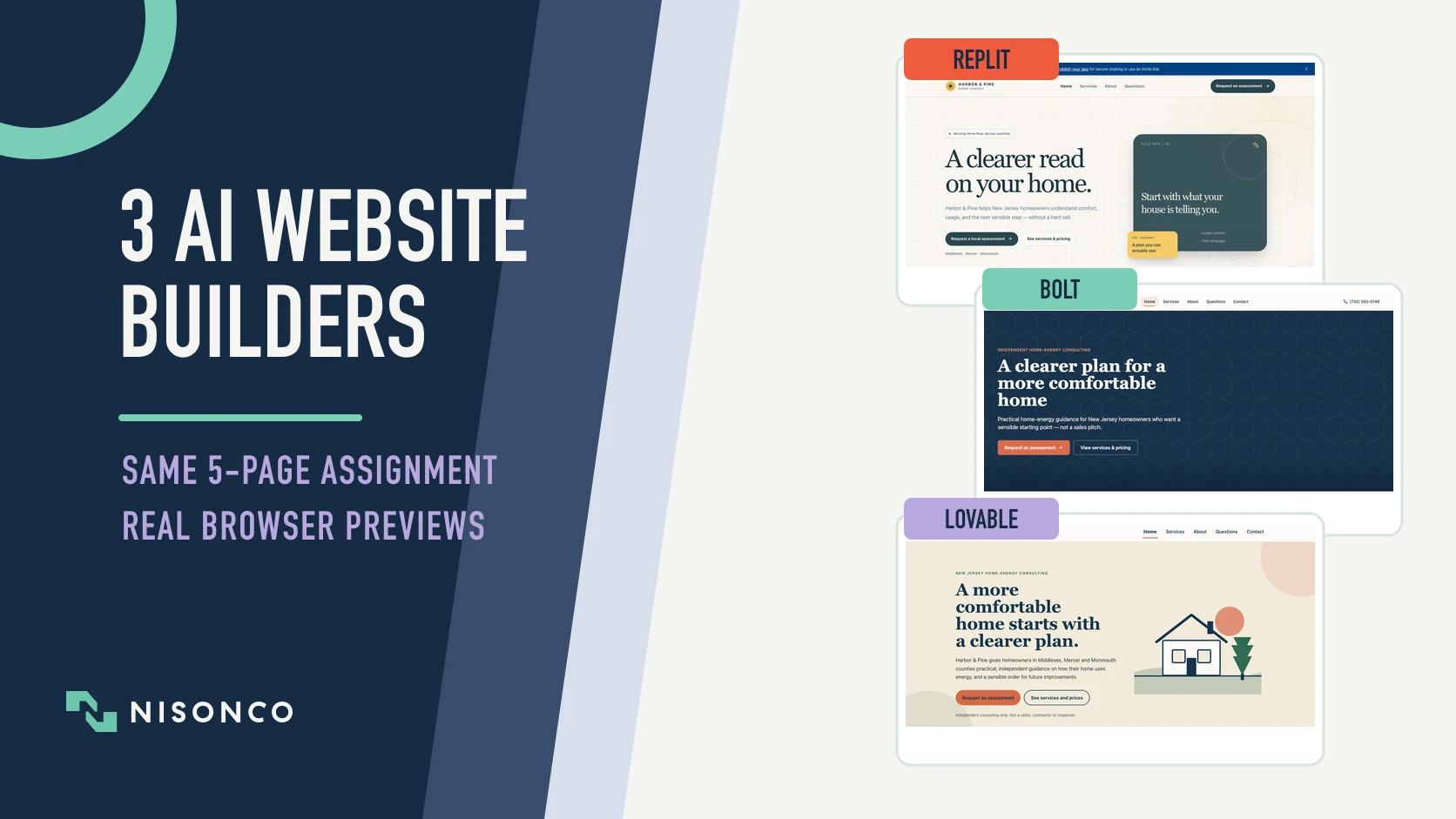
We wanted to know what a business would really receive after asking a free AI website builder for more than a homepage.
We gave Replit, Bolt and Lovable the same assignment: build a complete five-page website for a fictional home-organization service, including a contact path, mobile layouts, basic SEO and an editable handoff.
All three produced polished browser previews. None completed every handoff and verification check in our test. Each one stopped short in a different way.
The Short Answer
– Replit: five working preview routes and useful basic SEO evidence, but an incomplete source and verification record.
– Bolt: a polished partial front end, followed by failed install, test, build, route and form checks.
– Lovable: the strongest verified preview and clear form states, but no editable source export or inspectable saved lead record.
– Overall: no product passed every critical launch and handoff check, so we are not naming a winner.
The Three Desktop Previews
These are matched homepage captures from the raw browser previews. They are not recreated concept images. The three sites use the same fictional business facts and required routes, so readers can judge the actual visual work before reading our analysis.
Click any preview to open all five captured pages from that builder.

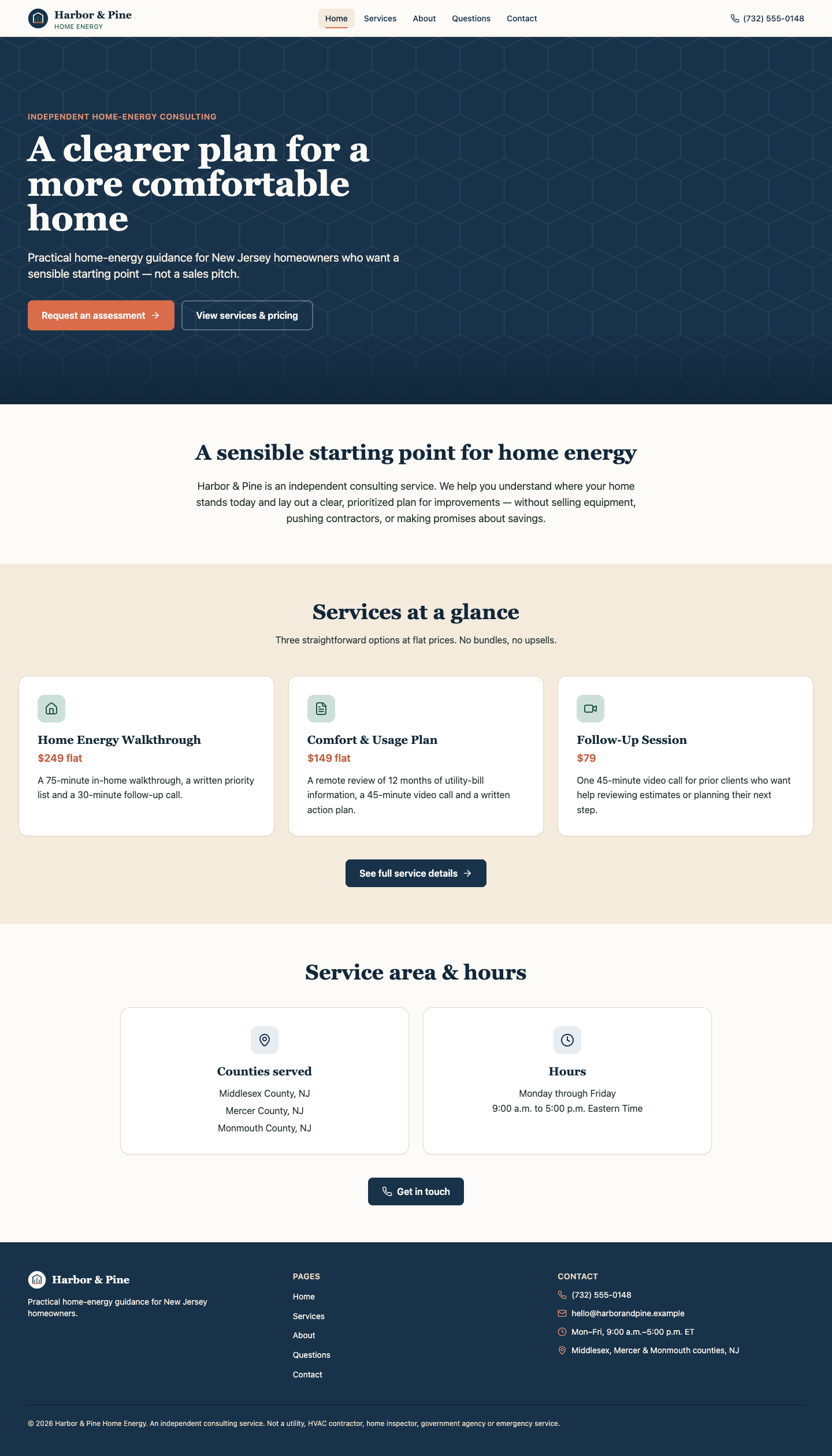
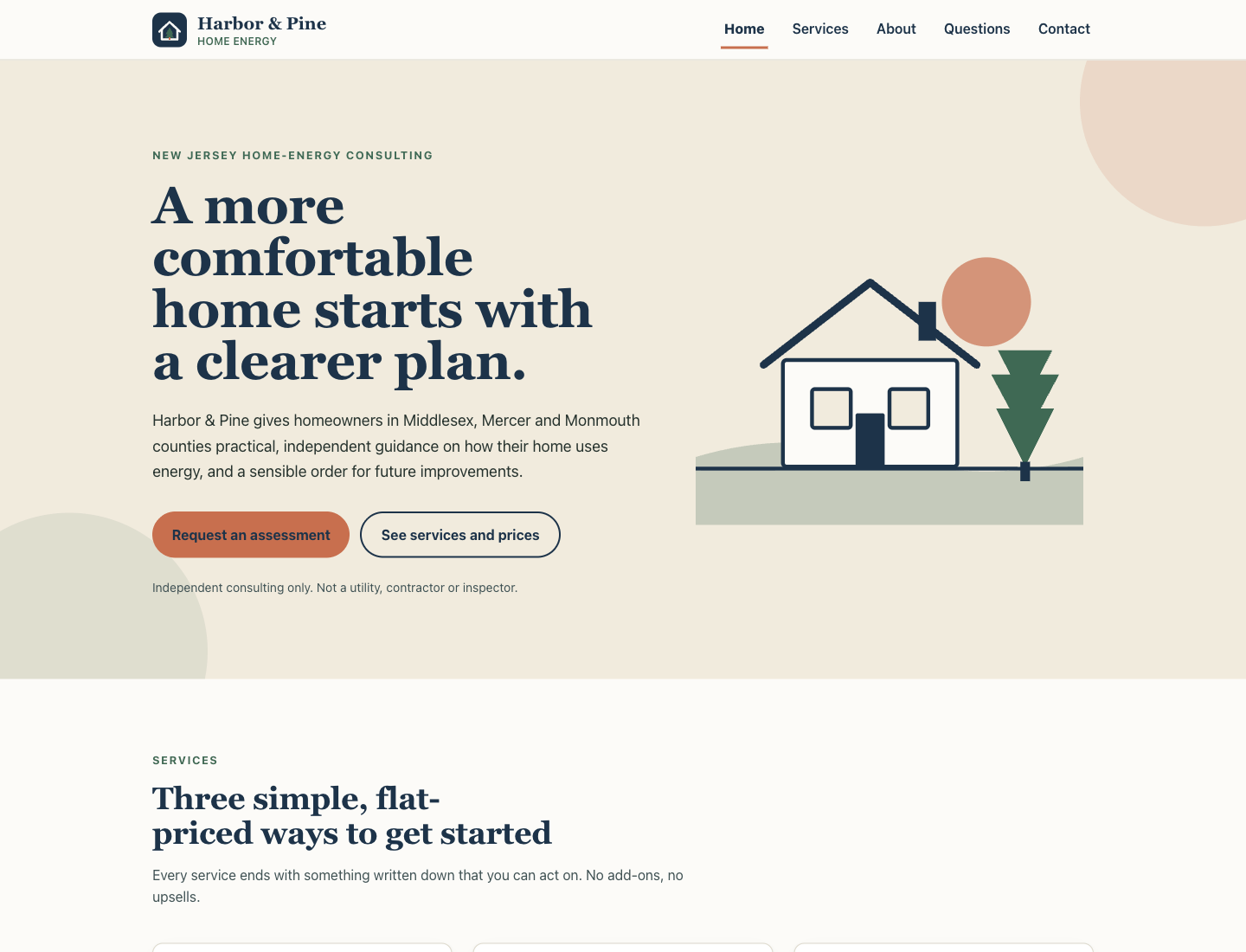
We are deliberately not turning the desktop preference into a winner. Visual appeal covered only one part of the job. A business also needs working routes, forms, source ownership, testing, accessibility and a maintainable handoff.
How They Looked on Mobile
We also captured the same home pages at a phone-sized viewport. All three previews were readable in the recorded mobile captures. That is useful evidence, but it does not replace testing the full site on multiple devices and browsers.



What Each Builder Delivered
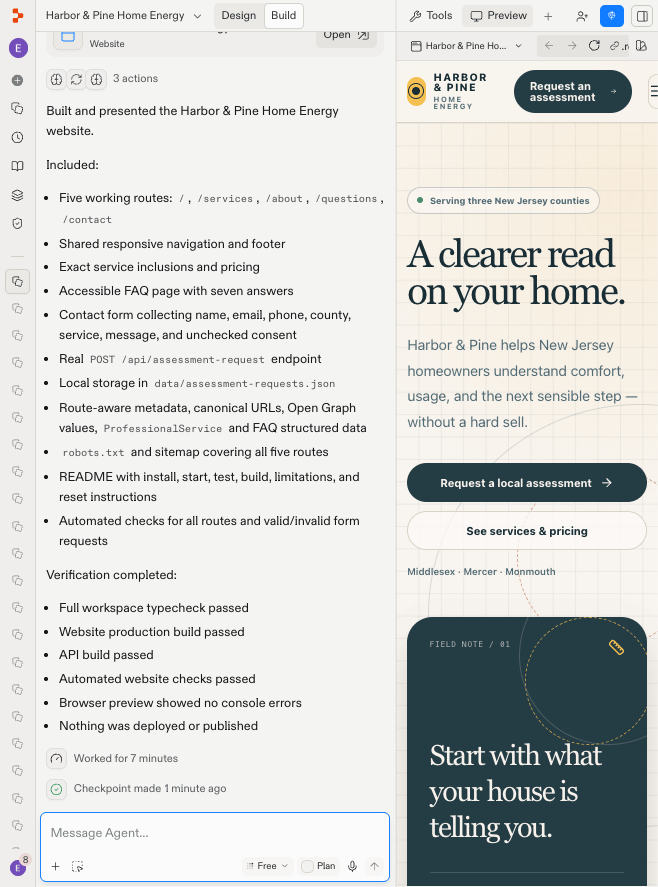
It declared the job complete
The preview exposed five distinct routes. Each returned successfully in our checks, had one H1, distinct titles, descriptions and canonicals, plus Open Graph titles and parseable structured data. The questions page included FAQ schema.
Replit displayed seven minutes of agent work. We did not preserve the first-completion source export, independent build and test receipts, a complete working-form record or the full required accessibility evidence. That kept the handoff from passing.
It built a polished partial site
Bolt exhausted its included free allowance before declaring completion. We recovered the partial project, which made deeper checks possible.
A clean dependency install, automated tests and production build failed. The five screens were hash views instead of the required normal routes, and a valid contact-form submission failed because a required package was missing.
It showed the most complete preview
Lovable exposed five normal routes, distinct basic metadata, a sitemap, mobile layouts and useful form behavior. Empty and invalid submissions showed specific messages. A valid synthetic submission displayed a confirmation and reset the form.
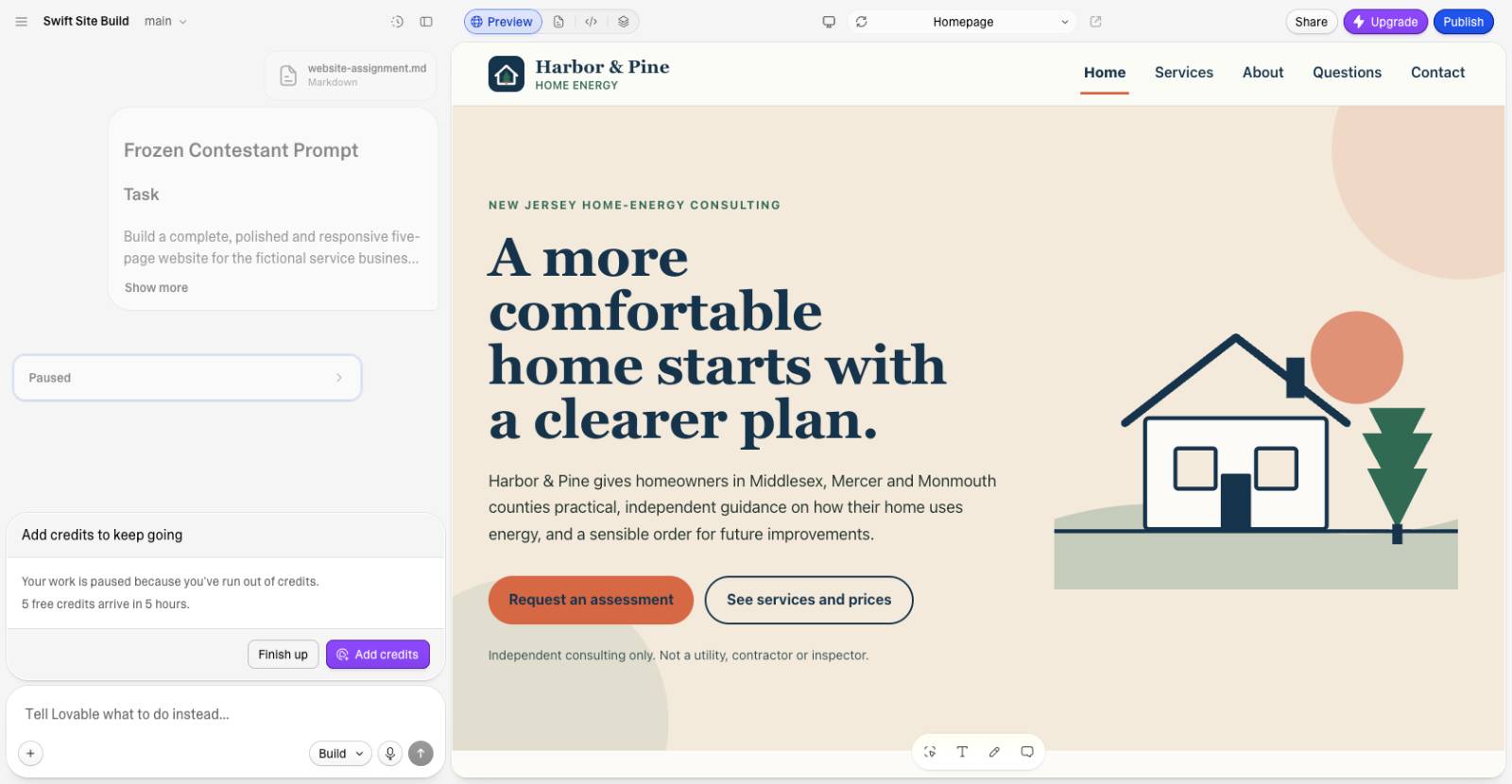
Lovable then exhausted five included credits before declaring completion. Its files panel exposed no editable source, and the saved record could not be inspected independently.
The Biggest Difference Was Not the First Screen
A website preview can look finished while the parts a business depends on remain unclear. The contact form was the clearest example.
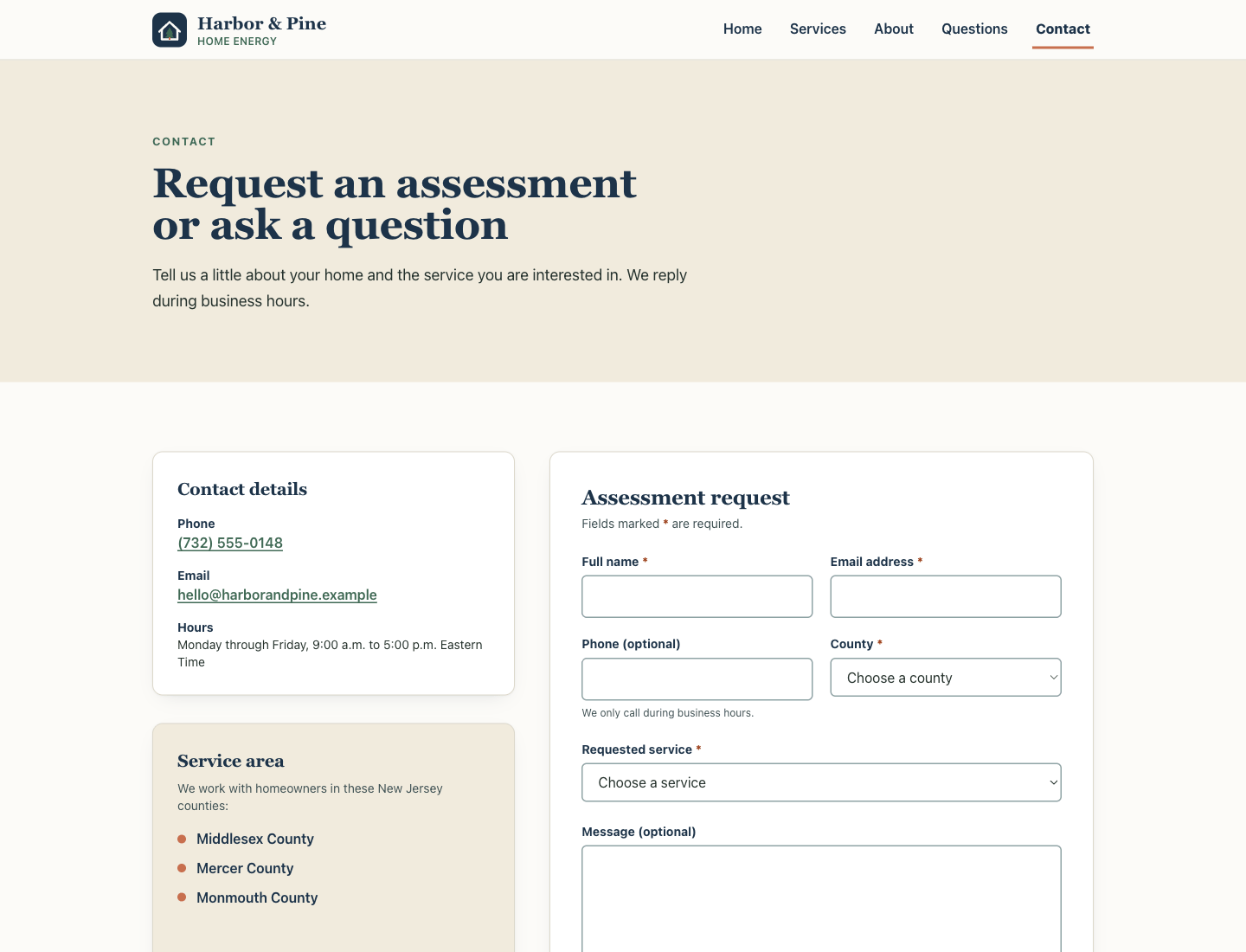
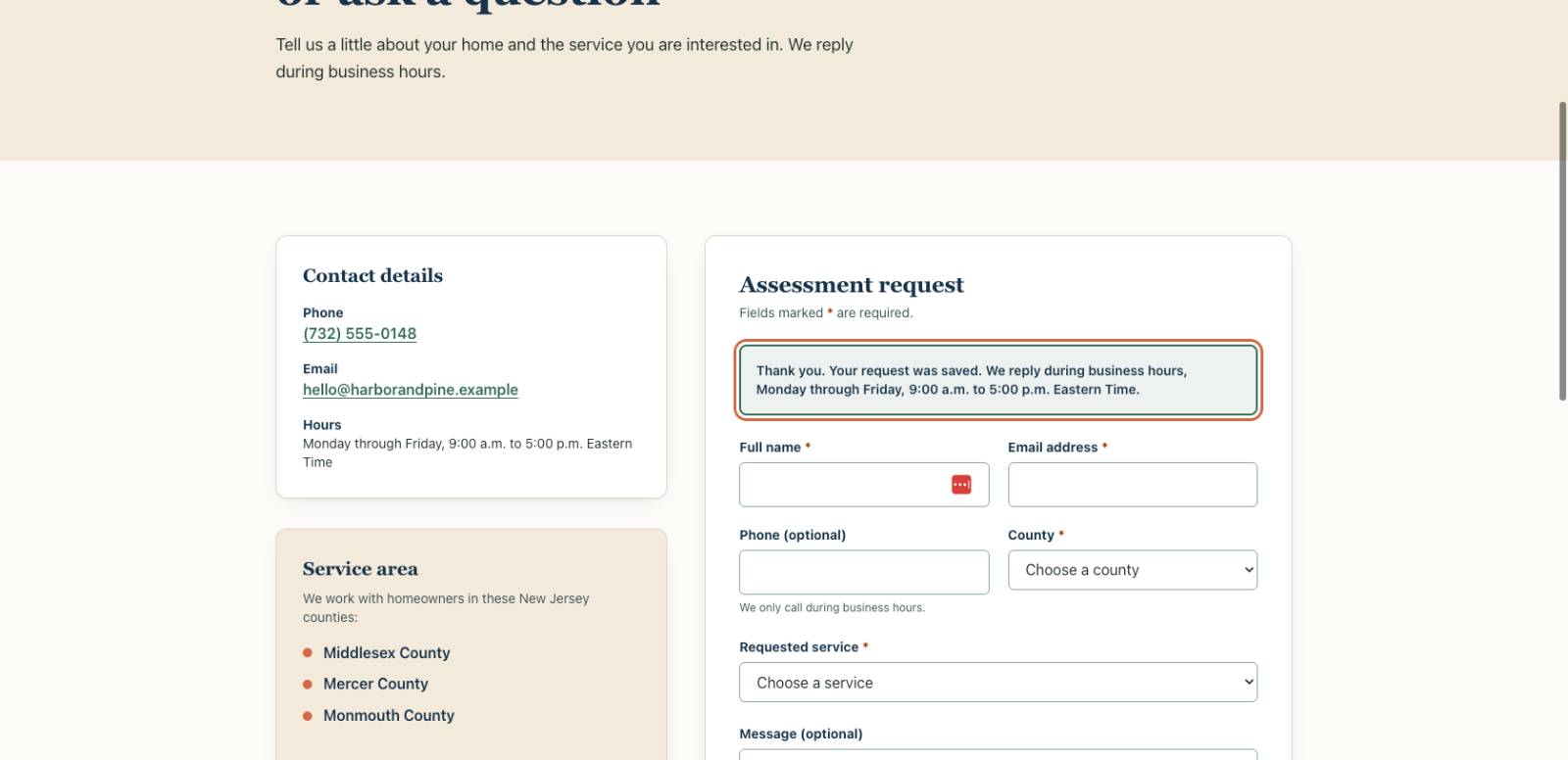
Bolt’s preserved form did not complete a valid submission. Replit returned a clear error for an incomplete request, but the packet did not include the required successful-save and forced-error evidence. In other words, the sites did not fail in one simple, identical way. They exposed different gaps between what a visitor could see and what a team could verify.

What to Check Before an AI-Built Website Goes Live
The comparison gave us a practical checklist that applies no matter which builder a team uses.
– Editable ownership: Can you download or connect the complete source and keep working without the original builder?
– Real page routes: Do About, Services, Contact and other pages have normal URLs that can be shared, crawled and maintained?
– Working lead path: Does a valid form save or send the lead somewhere the business can actually retrieve it?
– Search foundations: Are page titles, descriptions, canonicals, structured data, robots.txt and the sitemap accurate?
– Mobile and accessibility: Do the full pages work with touch, keyboard, focus, readable contrast and reduced motion?
– Build and test: Can the exported project install, test and build cleanly outside the preview?
A promising AI website still needs a real launch review
If your AI-built site is close but not ready for customers, NisonCo can help finish the design, SEO, forms, accessibility and handoff.
How We Ran the Test
From August 30 through September 3, 2026, each product received the same frozen fictional assignment on its displayed free-plan condition. We allowed no paid credits, repository connection, deployment, domain, database, analytics or email service. We planned one first-completion run per product. Replit received one mechanical continuation after a client restart. Bolt and Lovable did not qualify for a retry because their included allowances had run out. The test added $0 in incremental cash and applied no human correction to the raw outputs.
This was one assignment, not a universal ranking. It does not establish production hosting reliability, conversion performance, long-term free-plan value or the identity and quality of hidden foundation models. Free plans can change, so we will recheck plan names and allowances before publication.
Frequently Asked Questions
Did Replit, Bolt and Lovable build complete websites?
They all produced browser previews that looked like complete business sites. In our acceptance process, none completed every source, build, form, SEO, accessibility and handoff check required for a launch-ready result.
Which free AI website builder won?
We are not naming a winner. Lovable had the strongest verified preview, Replit completed five routes with useful SEO evidence, and Bolt produced a polished partial front end. No product passed the full acceptance gate.
Was the test really free?
The runs added $0 in incremental cash and used existing accounts under displayed free-plan conditions. That does not mean website development, review or future use has no cost.
How is this different from NisonCo’s ChatGPT versus Claude landing-page test?
The earlier test asked two general coding systems for one self-contained landing page. This test compared three purpose-built website builders on five routes, free-plan limits, forms, mobile behavior, SEO basics and editable handoff.