Table of Contents
– What Are GEO, AEO and AI Search Optimization?
– The Current AI Search Landscape
– How AI Search Engines Retrieve and Cite Sources
– How to Rank in ChatGPT and AI Overviews
– The Critical Role of PR and Earned Media
– Technical Implementation Steps
– How to Measure AI Visibility and Citations
Quick Takeaways
– AI-search visibility varies by platform and dataset; BrightEdge reported that AI Overview presence increased from 34% to 46% year over year
– A separate BrightEdge analysis found that 89% of AI Overview citations came from pages outside the traditional top 10; traditional SEO and AI citation visibility overlap but are not identical
– Zero-click behavior jumps to roughly 80% when AI summaries appear, making citation and visibility more valuable than ever
– Earned media can broaden the number of authoritative third-party sources through which AI systems may discover and corroborate a brand
– AI-search interfaces and source patterns differ by platform, while their exact ranking and citation systems are not fully public
– Answer-first structure, entity clarity, freshness where it matters, and Google’s E-E-A-T principles are useful editorial foundations; exact AI citation systems vary by platform and are not fully public
What Are GEO, AEO and AI Search Optimization?
The search landscape has fundamentally shifted. When you type a question into Google, Bing, or ChatGPT today, you’re increasingly met with an AI-generated answer before you ever see traditional blue links. This isn’t an experiment; it’s the new default behavior across major platforms.
Google’s AI Overviews expanded to more than 100 countries by October 2024 and continue to evolve. Microsoft launched Copilot Search with prominent source citations. OpenAI integrated search directly into ChatGPT. Perplexity positions itself as a citation-forward “answer engine.” Collectively, these platforms are reshaping how brands achieve visibility online.
The stakes are significant. BrightEdge reported that AI Overview presence increased from 34% to 46% year over year. Prevalence still varies by dataset, vertical, geography, and query type. For businesses that built their marketing around driving website traffic, this creates both disruption and opportunity. The key question becomes: how do you optimize for AI search engines to ensure your brand gets cited when AI answers questions in your industry?
The Current AI Search Landscape
Understanding how to rank on AI search results starts with recognizing the competitive landscape. Four major players dominate AI-powered search, each with distinct behaviors and opportunities:
Google AI Overviews
Google’s AI Overviews surface primarily on informational queries, with roughly 88% appearing on these types of searches. Healthcare, education, and B2B technology show particularly high AIO presence. BrightEdge data reveals that while impressions increased 49% in the first year, clicks to websites dropped nearly 30%; underscoring why getting cited within the overview itself matters.
Microsoft Copilot Search
Microsoft’s Copilot Search explicitly foregrounds citations, with inline links to exact passages and comprehensive source lists. The platform emphasizes verified grounding to support what Microsoft calls a “healthy web ecosystem”; creating opportunities for brands with well-structured, authoritative content.
ChatGPT Search
ChatGPT Search integrates links to web sources directly into conversational responses. The company has secured high-profile media licensing deals with News Corp, Axel Springer, and others, which can affect what content is available to its systems. Those agreements do not establish that a partner will appear more often in a particular answer.
Perplexity AI
Perplexity launched a Publishers Program sharing ad revenue with partners including TIME, Fortune, LA Times, and The Independent. The program can affect content access and commercial participation, but Perplexity does not publish a rule showing that partners or fresher pages receive a fixed ranking boost. Timely, well-sourced pages are still worth testing for news-driven queries.
How AI Search Engines Retrieve and Cite Sources
AI search optimization requires understanding the technology framework that powers these systems. Most AI search engines rely on Retrieval-Augmented Generation (RAG). When a user asks a question, the system doesn’t just generate an answer from its training data. It actively searches for current, relevant information from across the web, then uses that retrieved content to ground its response in factual, up-to-date information.
The critical question for marketers: which sources does the AI trust enough to retrieve and cite? This isn’t random. AI search engines retrieve and cite content using systems that overlap with traditional search in some ways, but their exact selection and weighting methods are not fully public.
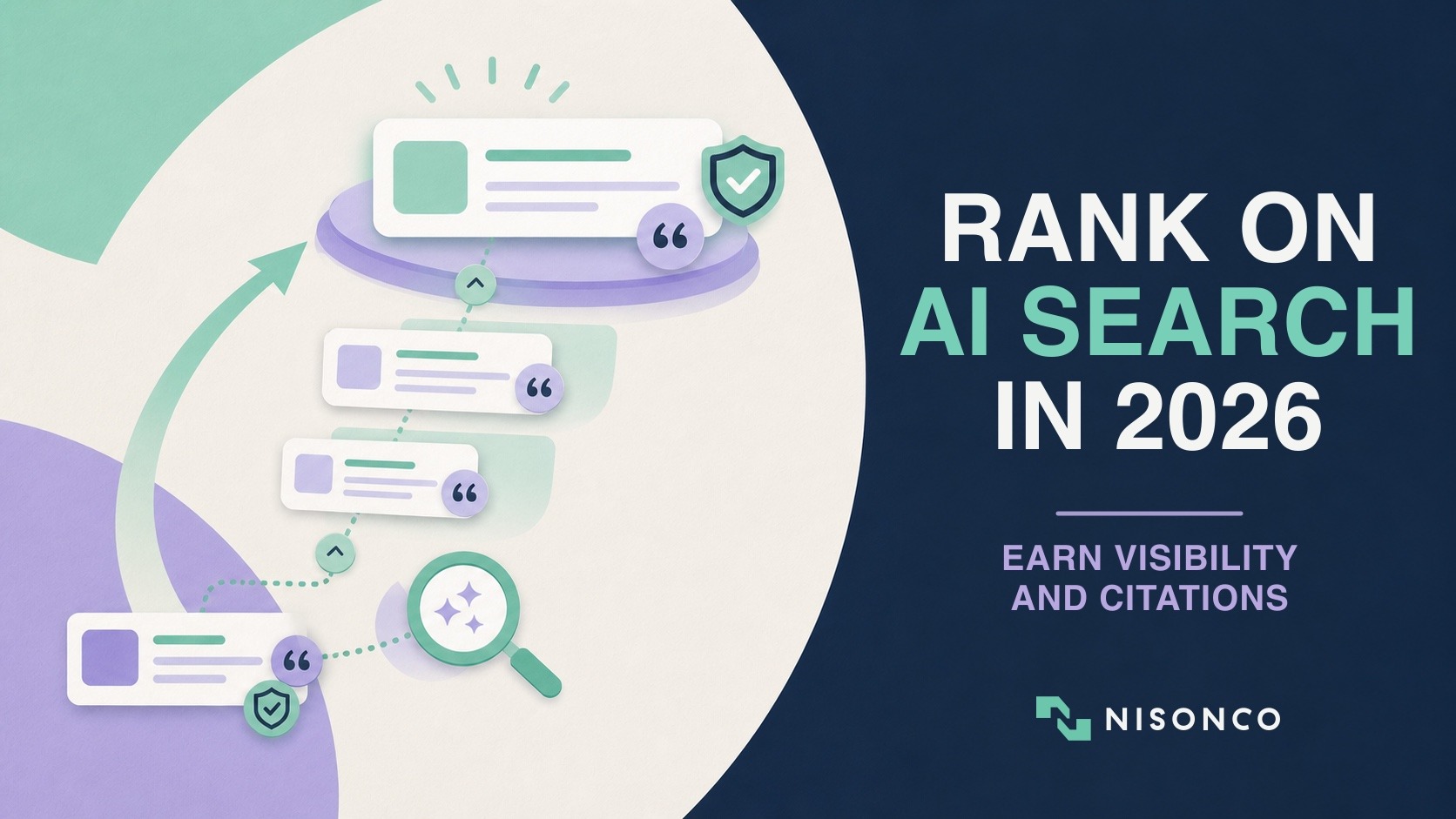
A separate BrightEdge analysis found that 89% of AI Overview citations came from pages outside the traditional top 10. Traditional SEO remains foundational, but a page-one ranking does not guarantee an AI citation and an AI citation does not require a page-one ranking.
Published studies and manual audits often surface answer-first structure, entity clarity, verifiable expertise, independent corroboration, and appropriate freshness as useful characteristics. No universal cross-platform weighting is public, so treat these as testable priorities rather than a fixed ranking formula.
AI Search Ranking Factors
Answer-First Content Structure
Clear, direct answers make content easier for readers and machines to interpret. Use a concise summary after question-style headings when it helps the reader, without treating a fixed word count as a ranking rule. This “answer block” format maximizes the likelihood that AI systems can cleanly extract and cite your content.
E-E-A-T Signals (Experience, Expertise, Authoritativeness, Trustworthiness)
Google’s guidance emphasizes helpful, reliable, people-first content built on E-E-A-T principles. For AI search visibility, this translates to clear bylines with expert bios, transparent methodology sections, links to primary sources, and demonstration of first-hand experience. Google documents E-E-A-T as part of its quality guidance. Across other AI-search platforms, use these practices as a reader-trust and editorial-quality proxy rather than a confirmed cross-platform ranking factor.
Entity Clarity and Schema Markup
Help AI search engines understand who you are and what you’re authoritative about. Implement Organization and Person schema with robust “About” pages and consistent sameAs links across authoritative profiles. This disambiguation helps AI systems confidently cite your brand and connect your content to relevant queries.
Content Freshness
Freshness can matter when a query involves changing facts, products, prices, or events, but it is not a universal substitute for depth or authority. Update high-value pages when the substance changes, use accurate “last updated” dates, and refresh time-sensitive statistics regularly.
Structured Data Implementation
Use relevant schema markup, such as FAQ, HowTo, Product, or Review, to help machines parse your content structure. There is no special “AI Overview” markup. Valid structured data can help search systems understand page entities and content types, but it does not guarantee an AI citation.
How to Rank in ChatGPT and AI Overviews
Optimizing for Google AI Overviews
Google offers no direct opt-in for AI Overviews. Your path to visibility requires ranking strongly in organic results for your target queries, then structuring content to answer not just the primary question but second- and third-order questions users typically ask next. Study the “People Also Ask” boxes for your key topics; these represent the query patterns that trigger AI Overviews.
Category patterns can vary significantly by dataset and over time. If you operate in a vertical where AI Overviews frequently appear for your tracked queries, monitor that keyword set directly and adapt your optimization priorities accordingly. For businesses seeking specialized support, our Generative Engine Optimization (GEO) services focus specifically on maximizing visibility in AI-powered search results.
Microsoft Copilot Search Strategies
Ensure discoverability in Bing through proper sitemap submission and Bing Webmaster Tools registration. Consider implementing IndexNow for rapid recrawl of frequently updated content. Because Copilot emphasizes traceable citations with inline passage links, structure your content with clear, self-contained sections that can be cited independently.
ChatGPT Search Optimization
OpenAI has licensing partnerships with major media outlets, but a partnership does not guarantee that coverage will appear in a particular ChatGPT Search answer. Earned media still helps by building third-party authority and discoverable coverage across the web. This elevates the strategic value of traditional public relations within an AI search strategy.
Perplexity AI Optimization
Perplexity displays visible citations and often surfaces current material for time-sensitive queries. Create concise, citable pages with verifiable claims linked to primary sources, and keep core answer content accessible where your business model permits. Monitor which pages appear for a repeatable query set and update material when facts change. Do not assume that a newer page will automatically outrank a more comprehensive older source.
The Critical Role of PR and Earned Media
Here’s what many brands miss when learning how to appear in AI search results: Third-party coverage can provide authority signals and independent context that brand-owned pages cannot provide on their own. The exact weighting used by AI search systems is not public and should not be treated as a fixed ranking formula.
Yext’s 2025 analysis of 6.8 million citations found first-party websites and listings were the two largest source categories, at 44% and 42% respectively, while reviews and social sources accounted for 8%; the source mix varied materially by platform. Earned media can broaden the authoritative third-party sources through which AI systems may discover and corroborate a brand, but it does not guarantee citation.
What does this mean practically? Your AI search strategy must include strategic public relations:
– Place original research, thought leadership, and data-driven stories with credible publications in your industry
– Pursue expert commentary opportunities, interviews, and op-eds that establish your authority with third-party validation
– Target vertical directories and rating sites that AI engines cite (healthcare directories, industry associations, review platforms)
– Build relationships with credible outlets relevant to your audience; licensing can affect source availability, but it does not guarantee citation
For businesses in emerging industries like cannabis, psychedelics, and plant medicine, this creates unique challenges and opportunities. Traditional advertising restrictions make earned media even more valuable. Our PR services for product placement and reviews help brands earn third-party coverage that can provide independent context and strengthen authority beyond brand-owned pages.
The convergence of PR and SEO is not new, but AI search makes independent corroboration and discoverable coverage more valuable. Brands that ignore earned media may miss authority and citation opportunities, although strong owned content can still appear in AI-generated answers.
Technical Implementation Steps
Create Canonical Explainer Pages
Build definitive resources on your core topics: comprehensive guides, original benchmarks, clear definitions, and actionable checklists. Structure each page with a TL;DR summary block at the top, question-based H2 headings, and concise paragraphs that can be extracted cleanly by AI systems.
Implement Robust Schema Markup
Deploy Organization schema with your logo, contact information, and social profiles. Add Person schema for key executives and authors. Use Article schema for blog content, Product schema for offerings, and FAQ schema where appropriate. While schema alone won’t guarantee AI citations, it improves machine readability significantly.
Optimize Entity Signals
Consolidate your brand identity with consistent Name, Address, Phone (NAP) information across all platforms. Create comprehensive “About” pages that clearly explain your expertise, methodology, and credentials. Link to authoritative profiles (LinkedIn, industry associations, verified social accounts) using consistent URLs in your schema sameAs properties.
Control Snippet Behavior
If you need to limit how AI systems use your content, implement robots meta tags; specifically “nosnippet” to block excerpt use entirely or “max-snippet” to limit length. Google confirms these controls apply to AI Overviews and AI Mode. However, blocking snippets eliminates visibility in AI search results, so use this sparingly and strategically.
Establish Update Cadence
Create a content refresh calendar for your high-value pages. Update statistics, add new sections addressing emerging questions, and mark pages with visible “last updated” dates. Keep time-sensitive pages current and show a useful last-updated date. For evergreen topics, update when the substance changes rather than refreshing dates cosmetically.
How to Measure AI Visibility and Citations
Measurement is improving. Google Search Console is rolling out an official Generative AI performance report to a subset of site owners, showing impressions from AI Overviews and AI Mode. Because access is limited and the report currently focuses on impressions, combine it with repeatable platform checks and other visibility data.
Platforms like Semrush now expose AI visibility metrics alongside traditional organic rankings. seoClarity offers AI Overview tracking showing which of your URLs appear in AI-generated answers. Similarweb provides traffic estimates separating traditional organic from AI-influenced sessions.
Establish baselines by manually testing your target queries across Google AI Overviews, Bing Copilot, ChatGPT Search, and Perplexity. Document which brands currently get cited for your core topics. Track changes monthly as you implement optimization strategies.
Beyond quantitative metrics, monitor qualitative signals: Are you cited as a primary source or mentioned in passing? Does the AI summary accurately represent your expertise, or does it conflate you with competitors? Citation quality matters as much as citation frequency.
For businesses that need comprehensive AI strategy support beyond search optimization, our AI consulting services help integrate AI visibility into broader marketing operations and executive decision-making.
Common Challenges and Solutions
The Zero-Click Problem
Zero-click behavior jumps to roughly 80% when AI summaries appear, compared to about 60% without. Users get their answer directly in the search results and never visit your website. The solution isn’t to block AI access; it’s to treat citations themselves as valuable brand visibility and design conversion pathways that don’t depend exclusively on site visits.
Volatility and Inconsistency
AI Overview triggers shift by query type, market, device, and over time. Studies report conflicting prevalence rates because the systems continuously evolve. Accept that AI search optimization requires ongoing adaptation, not one-time fixes. Monitor your specific keyword set rather than relying exclusively on industry benchmarks.
Quality and Spam Policies
Google’s 2024 spam policy updates penalized scaled content abuse and site reputation abuse; targeting mass-generated content and “parasite SEO” tactics. AI-generated content itself isn’t prohibited, but low-quality, thin, or deceptive content faces systematic exclusion. Invest in genuinely helpful, expert-driven content that demonstrates E-E-A-T principles.
Paywalls and Access Restrictions
AI search engines may avoid citing content behind hard paywalls unless they have specific licensing agreements. Keep your core answer content accessible to maximize citation probability. Consider hybrid models: freely accessible foundational information with premium tools, databases, or consulting services as conversion paths.
For a practical tool stack to support this work, see our guide to AI SEO tools for small businesses.
Conclusion
Learning how to rank on AI search results isn’t about abandoning traditional SEO; it’s about evolving your strategy to meet a new information ecosystem. The brands best positioned for AI search visibility in 2026 and beyond are those that recognize the convergence of search optimization, public relations, entity clarity, and content structure.
Start with the fundamentals: rank strongly in traditional organic results, structure content for extractability, demonstrate verifiable expertise, and maintain freshness. Then layer in platform-specific tactics for Google AI Overviews, Microsoft Copilot, ChatGPT Search, and Perplexity. Finally, and this is critical, invest strategically in earned media and third-party validation.
The opportunity is to build a measurement habit while these interfaces are still evolving. Brands that test repeatable query sets, verify citations, and compare changes over time can learn which investments improve visibility for their own topics and audiences.
Don’t want to navigate AI search optimization alone? NisonCo specializes in helping businesses achieve visibility across both traditional search engines and emerging AI-powered platforms. Our team combines deep expertise in SEO, strategic public relations, and emerging AI technologies to position your brand where your audience is actually searching. Contact us for a free consultation to discuss your AI search visibility goals and how we can help you get cited by the engines that matter most to your business.